Intelligence got 1,000x cheaper. Bills kept climbing.
The price of AI per token is collapsing. The price of AI work is not. Here is why.
Every AI founder plans around one rule: tokens get cheaper.
A token is a small chunk of text. One word is about 1 to 2 tokens.
Equal quality now costs about 10x less each year. Margins should fix themselves.
Source: a16z, Appenzeller, 12 Nov 2024.
The rule is true. Let us check how true.
The rule holds. GPT-3-level text fell from $60 to $0.06.
In Nov 2021, only one model scored 42 on a general-knowledge test. It cost $60 per million tokens.
By Nov 2024, the cheapest model with that score cost $0.06. That is 1,000x less.
Source: a16z, LLMflation. MMLU score 42, third-party host prices.
Cheaper everywhere. Up to 900x a year on hard science.
Epoch AI tracked the price of reaching a fixed score. It fell 9x to 900x a year, depending on the task.
Coding fell 9x to 40x a year. Slower, and still fast.
That is the cheap end. Now the expensive end.
Source: Epoch AI, price trends by task.
The best model still costs what GPT-3 did.
Old capability got cheap. The top tier kept its price.
So what does the frontier cost to run?
Source: a16z, LLMflation.
Two prices run in opposite directions.
A 2025 study priced benchmark runs across many models. The price of a fixed score fell 5x to 10x a year.
Running the frontier models rose 3x to 18x a year. Bigger models think for longer.
We have seen this trap before. London, 1865.
Source: Gundlach et al., arXiv:2511.23455.
In 1865, Jevons saw the same trap in coal.
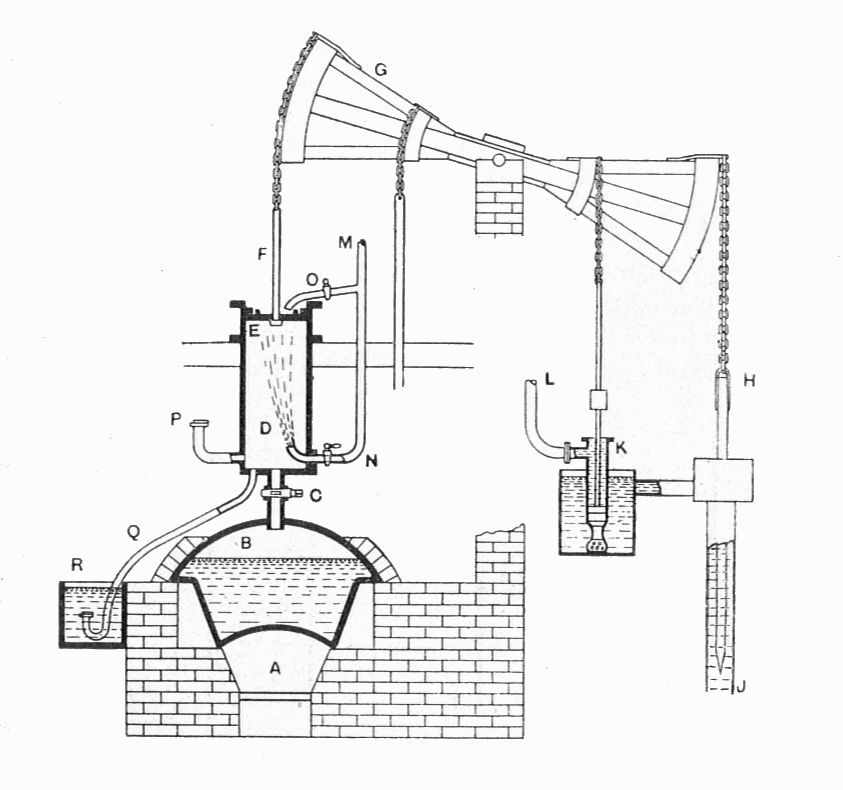
William Stanley Jevons watched steam engines improve. Each new engine burned less coal per job.
Coal use went up anyway. Cheaper power meant more people used more of it.
Now picture an engine that reads and writes.



An agent re-reads everything, every step.
A chat reads your question once. An agent acts, then reads the whole story again.
Say each step adds 1,000 tokens. One pass reads 1,000. Ten steps read 55,000.
Illustration: simple arithmetic. Mechanism per Bai et al., 2026.
Agent tasks use about 1,000x more tokens than chat.
Researchers ran eight frontier models on real coding tasks. Agent runs used about 1,000x the tokens of code chat.
Reading drives the cost, not writing. Each step re-reads the growing pile.
And the bill is not even stable.
Source: Bai et al., arXiv:2604.22750, SWE-bench Verified.
Same task. Same agent. Up to 30x the bill.
Runs of the same task differed by up to 30x in total tokens.
More tokens did not buy more accuracy. Accuracy often peaked at a middle cost, then flattened.
Source: Bai et al., arXiv:2604.22750.
The agent cannot predict its own bill.
Models guessed their token use before each task. The guesses matched reality weakly: at best 0.39, where 1.00 is perfect.
They also guessed too low. We do that with restaurant bills. Good company.
A flat price on top of that is a bet.
Source: Bai et al., arXiv:2604.22750.
Replit's margin ranged from 36% to negative 14% in 2025.
Gross margin is what stays from each $1 after paying to deliver. Public software firms sit near 78%.
The range came as demand surged. Cursor also changed its pricing in 2025 to pass higher model costs to heavy users.
Sources: The Information; TechCrunch; Rubenfeld.
Price per token is the wrong number to watch.
Falling prices help. They do not do the work for you.
This week: log tokens for 20 finished tasks. Your priciest run is your real risk.
- Track cost per finished task, not per token.
- Log tokens per task. Find your 30x spread.
- Cap agent loops. Charge heavy users by use.
Sources
- Appenzeller, Welcome to LLMflation, a16z, 12 Nov 2024
- Epoch AI, LLM inference prices have fallen rapidly but unequally across tasks
- Gundlach, Lynch, Mertens, Thompson, The Price of Progress, arXiv:2511.23455 (v2, Mar 2026)
- Bai et al., How Do AI Agents Spend Your Money?, arXiv:2604.22750 (v3, Oct 2026)
- Stanford Digital Economy Lab, How are AI agents spending your tokens?, 5 May 2026
- The Information, Replit's margins illustrate the high costs of coding agents
- TechCrunch, High costs and thin margins threatening AI coding startups, 7 Aug 2025
- Rubenfeld, Blame competition, not compute, for bad AI coding margins, 12 Sep 2025
- W. S. Jevons, The Coal Question (1865)
- More from the desk: all Vizmaya stories
Method and limits
- The 1,000x covers GPT-3-level text (MMLU score 42) on third-party host prices. Its author calls the method imperfect.
- Epoch ranges depend on task and time window. The fastest drops came in the latest year and may not last.
- The Price of Progress prices benchmark runs. It does not measure any company's actual bill.
- The agent study covers coding tasks on SWE-bench Verified. Other agent work may differ.
- Replit's margin range is as reported by The Information. The 78% public-software figure is cited second-hand.
- The 55,000-token example is arithmetic, not measured data. We found no single dataset of founders' bills.
Photos via Wikimedia Commons: Derrick Coetzee (CC0); G. J. Stodart (public domain); Heat Engines, 1913 (public domain).