

The morning
What happened to Cochlear on 22 April 2026?
At 8:20 am in Sydney, the company sent one page to the stock exchange. By 4 pm, its shares were worth 40.7% less.
A company that sells hearing implants does not usually fall like a rocket company. People who lose their hearing do not wait for the economy.
So here is the puzzle that runs through this story. The company said profit would be 30% lower. Why did its value fall by 40%? And what do bonuses and insider buying tell us about what the people inside believed?
Three questions to carry with you
1. How big was the real miss?
2. Where did the rest of the fall come from?
3. What did the pay and the share buying say?
First principles
What does Cochlear actually fix?
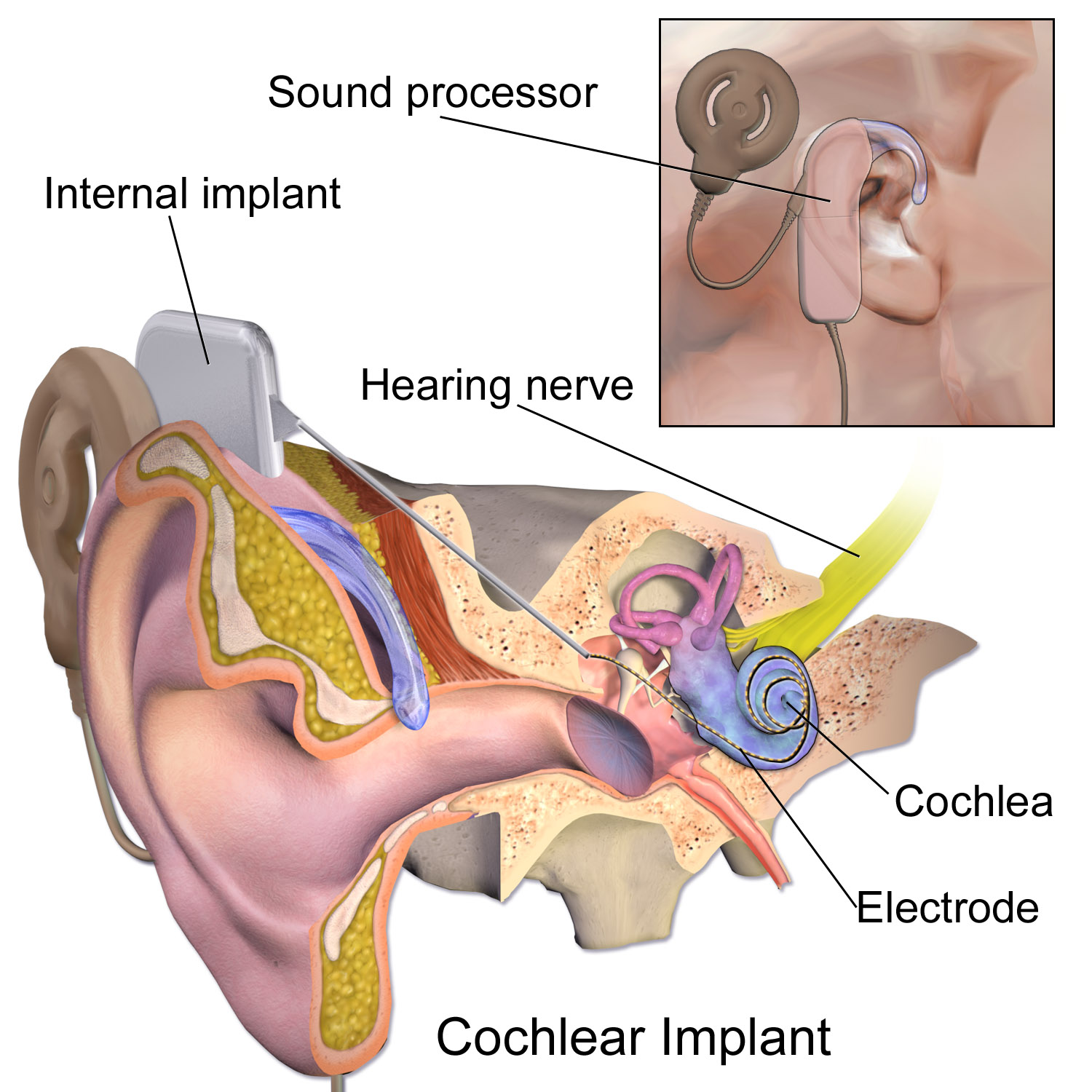
Hearing is shaking turned into signals. Cochlear builds the part that does the turning when the body can't.
Sound is air shaking. Deep inside your ear sits a snail-shaped tube called the cochlea. Tiny hair cells in it feel the shaking and send electrical signals to the brain.
When those hair cells are gone, a hearing aid, which only makes sound louder, may not be enough. A cochlear implant skips the broken part. It talks straight to the nerve.


The business
How does Cochlear make money?
Think of a toll booth on the hospital door. Every operation pays a toll. Cochlear does not control how many cars get through.
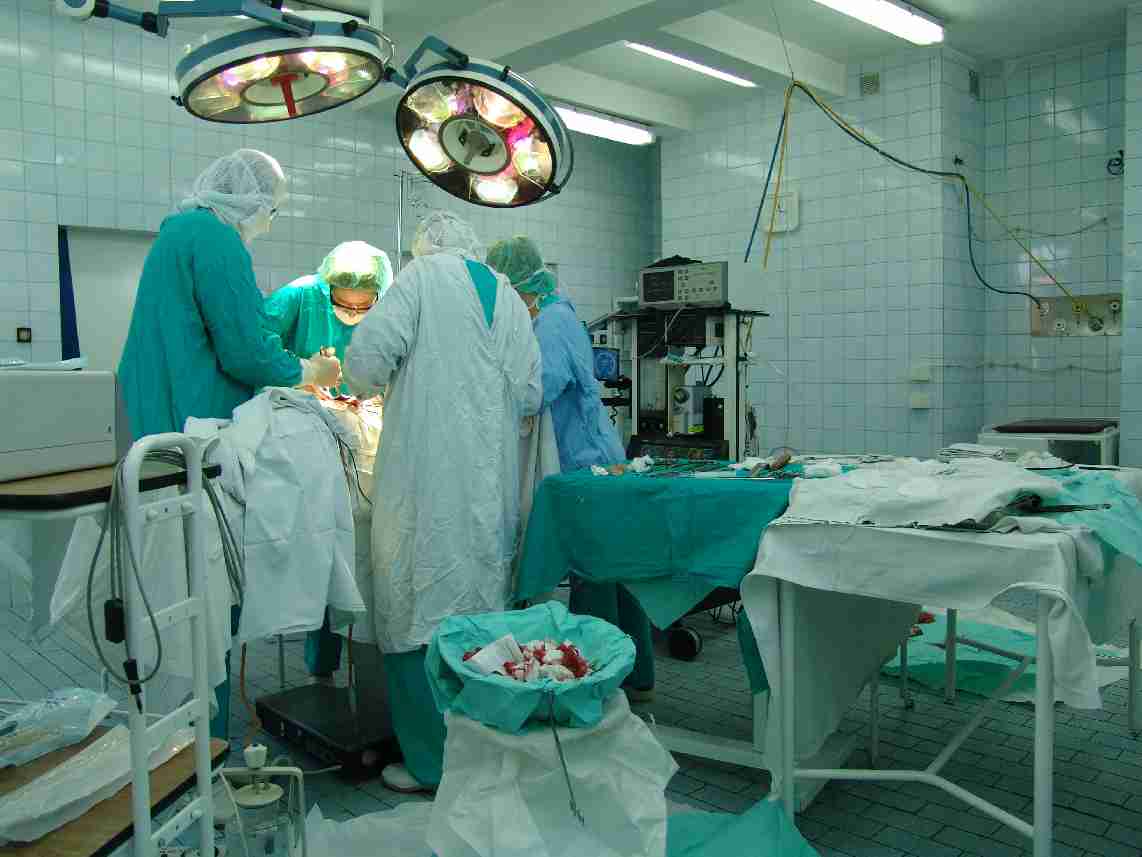
A surgeon fits an implant. Cochlear sells the implant and the outside processor. Years later it sells upgrades and service. In the year to June 2026 it sold A$2.34 billion of goods and services.

Where the toll booth breaks
A toll road is built once. Cochlear spends 12 to 13 cents of every sales dollar on research, and it keeps earning after the surgery. But the toll booth lens is right about one thing: the traffic belongs to hospitals and insurers.
The promise · 15 August 2025
What did Cochlear promise investors?
A big jump in profit. "Guidance" is the company's own forecast. This one said A$435 to A$460 million.
The page said that was 11% to 17% more than the year before. Read the small print and it changes. The year before had been counted in a different way. On the same basis, the promise was 5% to 11% more.
The same promise, on two scales
Underlying profit, A$ million. FY25 = year to June 2025
Source: Cochlear results, 15 Aug 2025; 18 Aug 2026. "Like for like" leaves out a computer-system project cost that Cochlear reports separately. Bars start at zero.
The first warning · 13 February 2026
Did Cochlear warn anyone before April?
Yes, with a quiet sentence. The printed range still said growth. The sentence said a small fall.
In February, half-year profit was down 9%. The company said full-year profit would land "at the lower end" of its range. It also said a stronger Australian dollar would cost about A$30 million.
Do the sum. A$435 million, less A$30 million, is about A$405 million. Last year, like for like, was A$414.5 million. That is 2.3% lower, not 11% higher.
The bank UBS already had A$408 million in its model. Remember A$405 million. It matters on the next screen.
Sources: Cochlear half-year results, 13 Feb 2026; Market Index; Morningstar. Arithmetic is ours.
The day · 22 April 2026
What did the cut say?
New forecast: A$290 to A$330 million. Old forecast: A$435 to A$460 million. Middle to middle, that is 30.7% lower.


- Forecast issued: A$435m to A$460m.
- "Lower end" warning. Shares -18.9%.
- US implant volumes slip, the company later says. Europe's surgery queues grow.
- Forecast cut. Shares -40.7% to A$99.58.
- Result: A$322.4m. Near the top of the new range. Shares rise about 7%.
- A shareholder class action is filed. Cochlear denies it.
- Capital Markets Day. Next year's forecast held at A$330m to A$350m.
The shares fell 59% in 69 days, then won back about three quarters of the last drop
Selected prices, A$. Not a daily series.
Sources: Market Index, Stocklight, InvestSmart, Motley Fool Australia. Dots on the line are director share purchases.
The twist
Why did the shares fall more than the profit?
Because investors had already counted on A$405 million. Against that, the miss was 23%, not 30%.
Three numbers that all get called "the cut"
Percent
Sources: Cochlear, 22 Apr 2026; our arithmetic. Bars start at zero.
The gap is the "multiple". It is a simple idea: how many years of profit are you paying for? Before the cut, the market valued Cochlear at about 27 times its expected profit. After it, about 21 times.
Read that last box twice. The shares have recovered, so the market is again paying a high price for each dollar of profit. Next year's profit is expected to be lower than two years ago.
Share count 65.4 million. Price about A$150 on 17 Nov (Morningstar, JournalArta). This is a description of the price, not a view on it.
Inside the cut
What was inside the A$125 million hole?
About half was named items. A quarter or so was costs the company chose to take. The rest was weaker sales.
Where the A$125 million went (rough sum)
From the old low end of A$435m to the new middle of A$310m. A$ million. Tile size = size of the piece.
Source: Cochlear, 22 Apr 2026. Restructuring was A$18-25m, the Middle East cover was "up to" A$10m. The leftover is our estimate, not a company number.
Two of the pieces were decisions: restructuring and a safety cushion for money owed from the Middle East. They were 22% to 28% of the cut. Nothing in the sources says that was a trick. Putting such costs in a year that is already a bad one is common. It is just worth seeing.
Later, the real restructuring bill was A$32 million. The year still ended near the top of the new range. A low bar is easy to jump over.
The cause
So was it that people stopped needing implants?
No. The company says the queue got longer. People were waiting, not walking away.


- US volumes held until mid-February, then fell in March, the company said.
- Surgery waiting lists grew in Western Europe, including the UK and Germany.
- Insurance approvals in the US ran slower. China changed what it pays for.
- A Middle East conflict held up orders in some emerging markets.
The new numbers back that up in one place: the number of adult operations. Over ten years they grew about 9% a year. In FY26 they were flat. That figure comes from one secondary source, so treat it as a lead, not a fact.
The story everyone repeated
"Cochlear is defensive. Hearing loss does not care about the economy." On 22 April that broke. The need is still there. The path to surgery is the part that wobbled.
The incentives
What did the bonus scorecard reward?
Revenue and strategy got paid. Profit got zero. And the CEO got nothing, by the board's choice.


The group bonus score was 37.3% of target. Profit added nothing.
Points of the score, FY26
Source: Cochlear Annual Report 2026, remuneration report, pp. 105-114. Check: 50% x 11.6% + 35% x 90% + 15% x 0% = 37.3%.
In 2025 the board had a rule: no profit target met, no bonuses. That year no executive was paid a bonus. For FY26 the board removed the rule. It said it feared losing people. Two other executives were paid A$383,024 and A$318,344.
The CEO got no bonus. The board said that the CEO is accountable for the whole company, including how shareholders did. That was a choice, not a formula.
Also on the table
For FY27 the board will give senior executives, not the CEO, an extra award that pays out over two and three years. The terms are not public yet.
Shareholders passed the pay report at the October AGM with 96.43% for. No "strike". AGM results.
Insiders
What did directors do with their own money?
They bought, twice. Bigger the second time. Neither round was a signal anyone should treat as proof.
Directors' share buying was 3.5 times bigger after the cut
A$ thousand bought, and the price they paid
3 directors, about A$200
5 directors, A$134-140
Source: InvestSmart director-interest filings, Motley Fool Australia. Another director bought small lots on the US market in August and November. Bars start at zero.
Look at the February round. Three directors bought about A$169,000 of shares at around A$200, six days after the first warning. Nine weeks later the price was A$99.58. Nothing we found alleges anything improper. These are filed notices. Both rounds are small next to a company worth A$9.8 billion.
One more fact, for balance. In September 2025 the CEO sold 849 shares for A$254,708, at about A$300 each. That is about 1.3% of what he held at June 2026. No insider sold anything after that in the next 14 months.
The cash check
Is the profit real, and where does the cash go?
The cash is healthy. The dividend ate all of it. And a A$175 million gap sits between the profit the company quotes and the profit in the accounts.
Cash earned vs profit, FY26
A$ million
Sources: Cochlear results, 18 Aug 2026. Dividends paid = A$4.30 x 65.4m shares, our arithmetic. Bars start at zero.
Good news. Cash from operations was 1.14 times the quoted profit last year. The year before it was 0.57. Money owed by customers fell 4.3% while sales fell 0.5%. That is not what a company hiding weak sales looks like.
The A$175 million gap. A$66 million is a computer-system project. A$109 million is a write-down of an investment, mostly in a brain-monitoring firm called Epiminder. Both are shown openly. The computer-system cost has appeared two years running, and a third year is coming. So do not wave it away.
Where the cash went. Cochlear paid out more in dividends than it earned in free cash, then cut the dividend 20% to A$3.45. It bought back no shares. Its cash cushion sat below its own A$200 million target.
Echoes
Has this happened to other loved device makers?
Yes. Twice in the last two and a half years, in the US. Same shape: a favourite, one forecast cut, one terrible day.


Dexcom, 26 July 2024
Blood-sugar sensors. Cut its sales forecast about 6%. Shares fell more than 40% to US$64, wiping out over US$17 billion. CNBC


Align Technology, 31 July 2025
Clear tooth aligners. Missed a quarter and cut its outlook. Shares fell 36.6% to US$129.01. Yahoo Finance
We checked five cases. Two fit closely, and one fit loosely. We did not check what the closest two did next, so this is a pattern, not a rule of nature.
The two futures
What would have to be true for each side?
Everything comes down to how fast profit grows from A$340 million. The gap by FY29 is A$36 million.
Profit in FY29 under two speeds
A$ million, starting from the middle of this year's forecast (A$340m)
Our arithmetic from the 13 Nov update. Bars start at zero. The price implies profit returns near the FY25 level around FY29 at 10% a year.
The case for recovery
- Adult operations restart after a flat year.
- Profit grows near 10% a year.
- Profit margin climbs from 14% toward 18%.
Two numbers decide it: profit reaching about A$411m, and margin back to 18%.
The case for a slow road
- Queues and insurance delays stay.
- Profit grows nearer 5% a year.
- Margin stays near 14%, and gross margin near 71%, not 74%.
Two numbers decide it: profit near A$375m, and gross margin stuck at 71%.
One fact both sides share: trading to the end of October was in line with mid-single-digit growth in implant numbers in rich countries.
What we can't tell you
What is still unknown?
Gaps are findings. Here are the biggest ones.
The class action says Cochlear misled the market and failed to disclose in time. That is an allegation. Cochlear denies it. No court or regulator has ruled.
When did management first know that March was weak? The public record does not say. The cut came about five weeks later.
Will the extra award for senior executives have profit hurdles? It will be published in next year's report.
We did not find the auditor's opinion, or the market's profit forecast just before the cut. A source that old is only one of the checks a careful reader would want.
Watch next: the half-year result in February 2027 (date not confirmed). Look at implant numbers in rich countries, the profit forecast, and the dollar.
The point
So what is the one thing to take away?
The bonus scorecard paid on revenue and strategy in a year when profit fell 22%. Only a board decision, not the formula, left the CEO with nothing.
The 30% in the headline was really 23%. The rest of the fall was a price people were no longer willing to pay for the same profit. Then the price crept back up.
For you: when a company says "guidance cut", find the number people already expected. Then check what the bonus plan rewards. A plan shows what a board hopes to see.