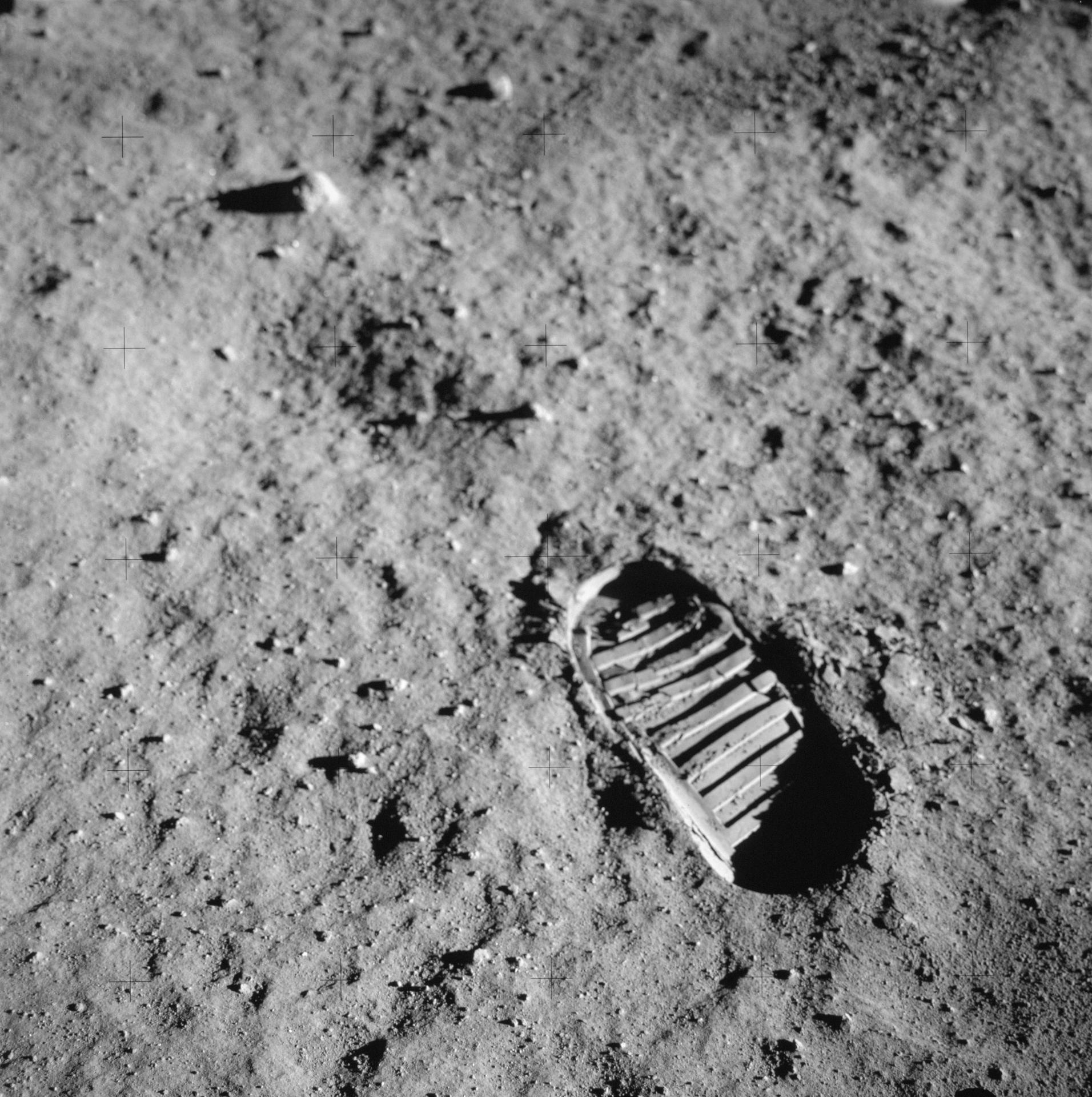
One fridge maker has signed for more helium-3 from the Moon than the United States gets from its warheads in a year. The newest quantum roadmaps need more of those fridges, not fewer.
Bluefors, a Finnish company that builds the dilution refrigerators inside many quantum computers, has agreed to buy up to 10,000 liters of helium-3 a year from the space-resources company Interlune, for delivery from 2028 to 2037. That is more than the roughly 8,000 liters a year the United States produces from decaying tritium in its nuclear weapons, and about two and a half times what the world's cryogenics sector was estimated to use in 2009.
CaveatThe 10,000 liters is a ceiling, and no one has yet harvested helium-3 on the Moon. The US and cryogenics figures are the latest that have been published, from 2009 to 2011; no current official number exists.
Alice & Bob, of Paris and Boston, doubled its 2030 target to 200 logical qubits from 3,600 physical qubits, spread across up to nine linked fridges.
IBM said it will reach 1,040 qubits in 2027 by linking two 520-qubit Nighthawk r3 chips, not by building one bigger chip.
The US Department of Energy named helium a critical material and called it non-substitutable for quantum computing. The notice does not mention helium-3.
IBM's largest single chip is still Condor, 1,121 qubits, shown in 2023. Since then its chips have been smaller and better: 133 and 156 qubits for Heron, 120 for Nighthawk. The next jump, to 1,040 qubits in 2027, comes from linking two 520-qubit chips.
Alice & Bob's new roadmap makes the same turn more sharply. Its machines stay in one module until 2028, then multiply.
A dilution refrigerator cools by mixing helium-3 with ordinary helium-4. Helium-4 alone cannot reach the 10 to 20 millikelvin that superconducting qubits need, so there is no substitute. On Earth, helium-3 comes almost entirely from tritium decaying inside nuclear weapons. In the United States the only source is the Savannah River Site in South Carolina.
The bars come from different years, which is the point: nobody publishes a current number. The US Department of Energy says only that "thousands of liters" are released a year, and that projected federal demand is under 6,000 liters a year.
It already has. The US stockpile fell from about 235,000 liters in 2001 to about 50,000 in 2010, and the federal government did not learn of the shortage until 2008. The price went from under $100 a liter to more than $2,100 within about two years. It has not come back down.
That shortage was driven by neutron detectors for border security, not quantum computers. In fiscal 2011 the US gave low-temperature research 700 of the 15,294 liters it allocated. The next squeeze, if it comes, would start from the fridges.
FactAlice & Bob's 2030 machine is planned across up to nine fridges, and IBM's 2027 jump comes from linking chips.
InterpretationThe unit of scale in superconducting quantum computing has moved from the chip to the cryostat. Every cryostat is a dilution refrigerator, and every one needs helium-3. So helium-3 demand now grows with the roadmaps themselves.
FactSupply is set by a weapons programme, not a market: about 8,000 liters a year in the last US figure. Bluefors, which has delivered more than 1,500 dilution refrigerators, has already contracted for more than that from the Moon.
SpeculationIf lunar deliveries slip past 2028, quantum machines would compete with border security and medical imaging for a few thousand liters a year.
The new US helium designation covers the common isotope, helium-4. Its notice names quantum computing but says nothing about helium-3, the scarce one. Since September 2024 the US has also controlled exports of the most powerful cryocoolers, those giving at least 600 microwatts of cooling at or below 0.1 kelvin.
For another fuel bottleneck behind a new technology, see our story on HALEU fuel and the choke point behind a new Canadian reactor. And for what makes quantum networks hard, see the quantum internet's waiting problem.
The Moon may not deliver. "Up to 10,000 liters" is a ceiling. Interlune has not harvested helium-3 in space, and has not published a mission date tied to 2028. It has sold the Department of Energy 3 liters, due by April 2029.
Fridges recycle their gas. A dilution refrigerator is a closed loop. A unit that does not leak keeps its charge for years, so demand comes from new fridges, not running ones.
Other machines skip it. Neutral-atom, trapped-ion and photonic quantum computers need little or no helium-3, and magnetic cooling can replace it in small systems.
Supply can widen. In 2011, Ontario Power Generation in Canada estimated up to 100,000 liters could be recovered from its heavy-water reactors, plus about 10,000 a year. Companies are also working to separate helium-3 from natural gas.
The official view is calm. The Department of Energy says its recovery and inventory management will meet federal demand for several decades.
IBM's Nighthawk r3 and its first 1,040-qubit linked system; Alice & Bob's 48-qubit Lithium.
First helium-3 deliveries due under the Bluefors and Interlune contract. Alice & Bob's 400-qubit Beryllium.
Deadline for Interlune's 3 liters of lunar helium-3 to the US Department of Energy.
IBM's fault-tolerant Starling, 200 logical qubits.
Alice & Bob's Carbon: 3,600 physical qubits across up to nine fridges.
A current official figure for US helium-3 output. None has been published since about 2011.
More on the Moon's strange chemistry: why moondust smells like gunpowder.
We logged 29 factual claims. Every figure on this page traces to a primary source or to two independent sources. Three claims stayed contested and are labelled where used. Three could not be verified and are not on the page: a market-share figure for dilution refrigerators, a reported Chinese mass-produced fridge, and an IBM cooldown time.
Contested: the historical auction price (CRS gives both $40 to $85 and $100 to $200); the claim, from Interlune's chief executive, that a majority of the quantum industry relies on Bluefors; and a price of about $20 million per kilogram, which traces back to Interlune alone.
What we could not find: a current figure for US helium-3 production or sales; quantum computing's present share of helium-3 demand; how much helium-3 one fridge holds, from a manufacturer; how many fridges Alice & Bob's 2032 and 2034 machines need; IBM's fidelity and coherence figures for Nighthawk r2 and r3.