
Science · A new study from NYU Abu Dhabi
NYU Abu Dhabi malaria study: the parasite's favourite fat
What does the malaria parasite eat? And could we starve it?
396 paired blood samples from children in Burkina Faso hold a clue.
vizmaya desk · 19 November 2026
The problem
About 610,000 people died of malaria in 2024.
That is 282 million cases in a single year.
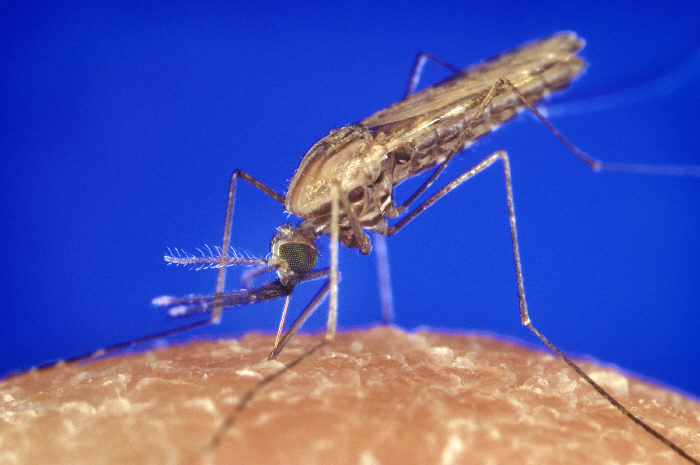
Of the deaths, 95% were in Africa. It all starts with one mosquito bite.
We have nets, drugs and vaccines. So why is the number not falling?
Source: WHO, World malaria report 2025.
The stall
Deaths fell 29%. Then they got stuck.
In 2000, an estimated 863,523 people died of malaria. In 2024, 609,930 did.
Since 2013 the number has stayed between 567,000 and 621,000.
What is holding it up?
Source: WHO Global Health Observatory, estimates updated December 2025.
The threat
Our best tools are being tested.
New nets and vaccines helped prevent about 170 million cases and 1 million deaths in 2024.
But the WHO warns that resistance to malaria drugs is growing.
If the old drugs fail, where do we aim next? At what the parasite needs to live.
Source: WHO news release, 4 December 2025.

The enemy
In one blood cell, one parasite becomes many.
The parasite lives inside red blood cells. In about 48 hours it copies itself, bursts the cell, and the copies invade new ones.

Making that many copies needs building material. What kind?
First principles
Every cell is wrapped in a wall made of fat.
Each fat molecule has a head and two tails. Line them up in two rows, tails inward, and you have a wall.
More parasites means more walls to build. We had to learn this too, so here is the short version.
Where does the parasite get its fat?
The key word
Linoleic acid is a fat we cannot make. We eat it.
It is found in many plant oils, such as sunflower oil. Our own cells use it in their walls too.
Remember the name. It comes back.
Is the parasite after it as well?


The old map
For 50 years, scientists mapped the parasite's food in dishes.
They learned it needs fats from our blood and can use many kinds. That was a fair picture, drawn mostly from a lab dish.
But a dish is not a child.
Sources: Trager and Jensen 1976 · Mi-Ichi 2006 · Brancucci 2017 · Ramaprasad 2022 · PNAS 2024.
The gap
Real children had barely been studied.
An earlier study of blood fats in children with malaria profiled 60 samples, picked out of 690 children.
The new study profiled 396 paired samples. Each child gave blood twice: before infection and during it.
What did those 396 samples show?
Sources: Orikiiriza et al. 2017; Abdrabou et al. 2026.
The place
Burkina Faso: deaths fell 64%, but 16,000 a year remain.
The blood samples came from children in Burkina Faso. The lab that analysed them sits in Abu Dhabi , with partners in Ouagadougou.

So what did these children's blood reveal?
The people
Three groups of children, so one group's habits cannot explain it.
The children came from three groups: Gouin, Mossi and Fulani. Their genes, food and customs differ.
If a pattern shows up in all three, it is less likely to be one group's diet or biology.
Did it show up in all three?


The pattern
47 fats fell when malaria arrived.
The lab weighed each fat in a drop of blood serum, before and during infection. In all three groups, 47 fats were lower during infection.
The more parasites in the blood, the lower they went.

Were all 47 the same kind? No. One kind stood out.
The twist
One kind of fat stood out.
7 of 9
Of nine wall fats that fell, seven carry linoleic acid.
1.0% to 4.3%
Then they tested it in a dish. Parasites grew in a low-fat medium. Add one linoleic fat, and the share of cells with parasites rose from 1.0% to 4.3%.
P = 0.008 · three separate runs
Source: Abdrabou et al., Genome Biology 2026. A vehicle-only control ran alongside.
The evidence check
What we cannot say yet.
No drug exists yet. And nobody should cut linoleic acid from their diet because of this study: the body needs it.
The payoff
A new place to aim, found by a lab in Abu Dhabi.
The authors point to the parasite's fat-handling machinery as a possible drug target.
The data are public, so other labs can check the work and build on it.
Next test: can we stop the parasite taking this fat? Nobody knows yet.

Sources & method
How we checked this.
The research
- Abdrabou W, et al. Integrated lipidomic and transcriptomic profiling of the host response in human malaria. Genome Biology, 30 June 2026. Open full text.
- NYU Abu Dhabi news release, 23 July 2026.
- Burden data: WHO World malaria report 2025 and the Global Health Observatory deaths series (2000 to 2024, updated December 2025).
- Older work: Mi-Ichi 2006, Brancucci 2017, Ramaprasad 2022, PNAS 2024, Orikiiriza 2017.
- More data stories: vizmaya.fyi/stories.
Method. Study counts, the 47 fats, the 7 of 9 linoleic fats and the dish test (1.0% to 4.3%, P = 0.008, three runs) are as reported in the paper. Illustrations marked as schematic are not data. Death counts are WHO model estimates with wide ranges; the 2024 Burkina Faso estimate is 16,184 (range 11,300 to 24,100).
Image credits (Wikimedia Commons)
- Red blood cells infected with malaria: Rick Fairhurst and Jordan Zuspann, NIAID, public domain.
- Anopheles gambiae feeding: James Gathany, CDC, public domain.
- Bed net distribution, Madagascar: USAID in Africa, public domain.
- P. falciparum smear: Jenkayaks, CC BY-SA 3.0.
- Sunflowers: PROPOLI87, CC BY-SA 4.0. Sunflower oil: Alex Blokha, CC BY-SA 4.0.
- Ouagadougou street: Syced, CC0. NYU Abu Dhabi: Andresmh, CC0.
- Mossi home: KindaRachid, CC BY-SA 4.0. Fulani man, 1970-71: Jan Broekhuijse, ASC Leiden, CC BY-SA 4.0.
- Mass spectrometer: Sarka Na kopci, CC BY-SA 4.0.
Prepared by vizmaya desk, 19 November 2026. Not medical advice.