
16,400 to 1.
Fine: CA ANZ tribunal, Nov 2023. Revenue: A$3.17bn (year to Jun 2023) to A$2.35bn (year to Jun 2024). A regulator's order is a finding. A charge is not a conviction. In my searches to 19 Nov 2026 I found no criminal charge.


What a secrecy promise is worth
It is a promise on paper. A broken promise is not a tax crime, commentators noted in 2023.
The trick, and the law aimed at it
Source: Senate committee report, PwC: A calculated breach of trust, June 2023.
1 January 2016.
The day the law started. The first alarm went off the same month.
One secret. Dozens of holders.
Source: TPB emails as reported by the ABC and others. Records differ: PwC's own list to the Senate named 63 people, partners and staff, in June 2023. Both are far more than one.
Tax at risk each year vs the fee for the first round of advice
Sources: ATO Commissioner's statement to the Senate, 30 May 2023; Senate committee report, June 2023.
PwC's side.
On 29 May 2023 PwC said no confidential information was used to enable clients to pay less tax. The TPB found PwC failed to manage conflicts of interest, and a Senate committee disagreed with PwC's account.
Seven years from the first alarm to public knowledge
Sources: ATO (30 May 2023); Senate committee reports; TPB (23 Jan 2023); Treasury (24 May 2023); Department of Finance (Aug 2025).

The tax office noticed
It acted, and says it "prevented any loss of revenue" from the scheme it found. Cash lost: A$0. Tax at risk: A$180m a year.
The four doors
1. Two agencies that could not talk
In 2018 secrecy law reportedly stopped the tax office from sharing what it knew with Treasury. Each held half the picture.
2. The police said no
After about a year, in 2019, the Australian Federal Police said they had too little evidence to go on.
3. Papers held back
Of the four big firms the ATO asked, only PwC claimed legal professional privilege, a right that keeps some lawyer papers secret (The Conversation, 2023).
4. No crime to chase
Breaking a secrecy promise is not a tax crime. Another law may apply, but it needs police, and police had stopped.

The rulings, one by one
TPB, decided Nov 2022, public 23 Jan 2023. Collins deregistered and barred for 2 years. PwC found to have failed to manage conflicts, and ordered to run training and report back. Proven
ASIC, 20 Oct 2023. Collins banned from financial services for 8 years. Proven
CA ANZ, Nov 2023. PwC censured and fined A$50,000, the most the tribunal could set. Proven
Police, 24 May 2023. Investigation open. I found no charge. Investigation only
Sources: TPB (23 Jan 2023); Money Management (20 Oct 2023); Business News Australia (28 Nov 2023); Treasury (24 May 2023).
The only fine I can confirm is 2% of the fee
Sources: Senate committee report, June 2023; CA ANZ via Business News Australia.
Federal contracts: 188 down to 3
Source: Department of Finance, Examination of the ethical soundness of PwC Australia (Aug 2025). Values are estimates over each contract's life.

Sold for A$1
On 8 November 2023 PwC sold its government consulting arm for one Australian dollar. It agreed not to compete for general government work until 9 November 2028.
Can you see the fine next to the revenue drop?
Sources: CA ANZ via Business News Australia; Accounting Times (25 Sep 2024), on a revenue basis that excludes disbursements.
Fair warning.
Part of the revenue drop came from selling the government arm and a weak consulting market, PwC says. So the scandal did not cause all A$820m. It caused some of it.
KPMG Australia, 2026
Whistleblower allegations that its audit side misused confidential client information were aired in March 2026. The government paused KPMG's bids for new federal work from 16 June 2026.
An independent review on 22 October 2026 found KPMG mishandled the claims. ASIC is investigating. Alleged
A former EY tax partner, 16 Nov 2026
The Federal Court found Peter White liable under the promoter penalty laws for promoting unlawful tax schemes to clients. The penalty is not set. An appeal is possible.
Court finding: liability
The ceiling for tax promoters went up 100 times
Sources: Treasury Laws Amendment (Tax Accountability and Fairness) Act 2024; Treasury (Feb 2026).

Check your own firm
- Keep a list of everyone on a government, regulator or industry panel.
- Write down what each person may share, and with whom.
- Check that list against who wins the work.
Still open.
The police investigation, open since 24 May 2023. The former TPB chief's complaints, now in the Senate (5 Nov 2026). The regulators looking at KPMG.
Sources and what I could not confirm
By vizmaya desk, 19 November 2026. More from us: vizmaya stories.
- Tax Practitioners Board release, 23 Jan 2023
- ATO Commissioner's statement to the Senate, 30 May 2023
- Senate report: PwC, A calculated breach of trust and The Cover-up Worsens the Crime
- Department of Finance: ethical soundness of PwC Australia, Aug 2025
- CA ANZ fine, Business News Australia, 28 Nov 2023 and ASIC ban, Money Management, 20 Oct 2023
- PwC revenue, Accounting Times, 25 Sep 2024 and 2025 annual report, Accountants Daily
- Tax Accountability and Fairness Act 2024 and Treasury response, Feb 2026
- ATO on the White decision, 16 Nov 2026
- ABC on KPMG, 16 Jun 2026, HCAmag, 18 Nov 2026 and Reuters, 1 Jul 2026
- Canberra Sentinel on the former TPB chief, 5 Nov 2026; ICIJ interview, 2023; The Conversation, 2023
Method. A figure needs one primary source or two independent ones. The 84 months run from January 2016 to January 2023. The 16,400 to 1 ratio is A$820m divided by A$50,000. The 72 to 1 ratio is A$180m divided by A$2.5m. My rule threshold of three is invented.
Not confirmed, and left out. The names and number of the clients. Any fee beyond the first round of advice. Any tax office penalty on PwC over document claims. Any criminal charge.
Photo credits are in each caption. All photos are from Wikimedia Commons under CC BY or CC BY-SA, as shown.

One scandal, two very different bills
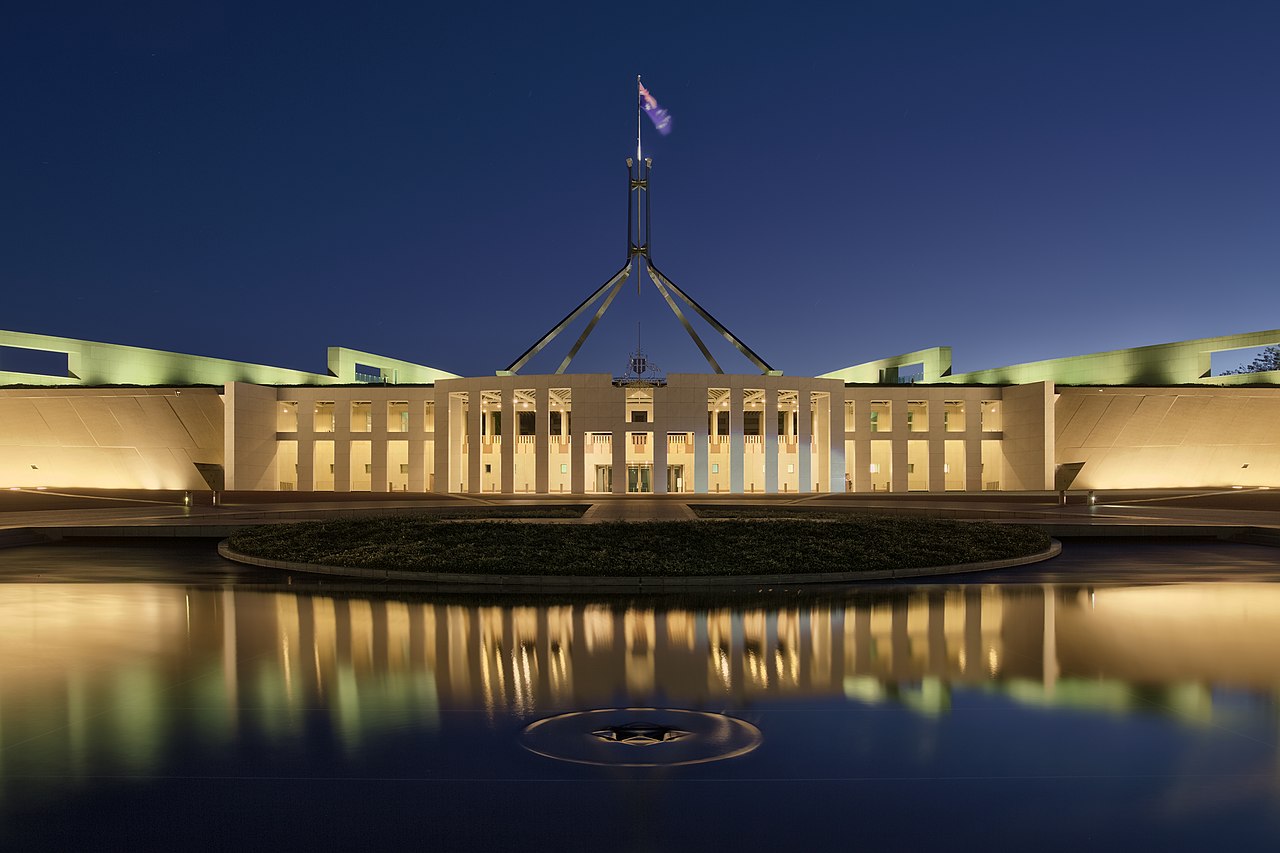
A$50,000 on one side. A$820 million on the other. That is 16,400 to 1. To see why, we start with a promise made in Canberra.
It starts with a promise of silence
In 2013 an expert from PwC joined a private Treasury group. He agreed to keep what he learned secret. Did he?
The law was a trap for one trick
Booking profit offshore, on paper, was the trick. A law starting on 1 January 2016 aimed right at it. Whoever knew the details early had a head start.
The secret spreads
Emails showed the plan moving through the firm. One partner became dozens. The counts differ, and the card shows both.
A$72 of tax at risk for every A$1 of fee
The first round of advice earned at least A$2.5 million. The tax at stake was A$180 million a year.
The alarm rang. The public heard 84 months later.
January 2016 to January 2023. Why did a clear alarm take seven years to reach anyone outside the agencies?
Four closed doors
A secrecy law. A police call. Held-back papers. A gap in the criminal law. Each one cost time.
Then came the rulings
A ban for one man. A censure for the firm. A fine of A$50,000, the most the professional body could set. Is that all?
The buyers did the punishing
Federal contracts fell from 188 to 3, and the government arm sold for A$1. No court ordered either.
Next to the drop, the fine disappears
Revenue fell A$820 million in a year. Not all of that was the scandal, and the sticky note says so.
The shape comes back in 2026
Another Big Four firm. Another whistleblower. A court finding against a former EY partner.
The rules got heavier
The penalty ceiling for tax promoters is now 100 times higher. Treasury is asking whether to break up the Big Four.
What would have caught it
One simple rule, a short list, and an honest list of what is still open.
Sources and what I could not confirm
Every number has a source. Where I could not confirm something, I left it out. Tap "Read as one page" for the full list.