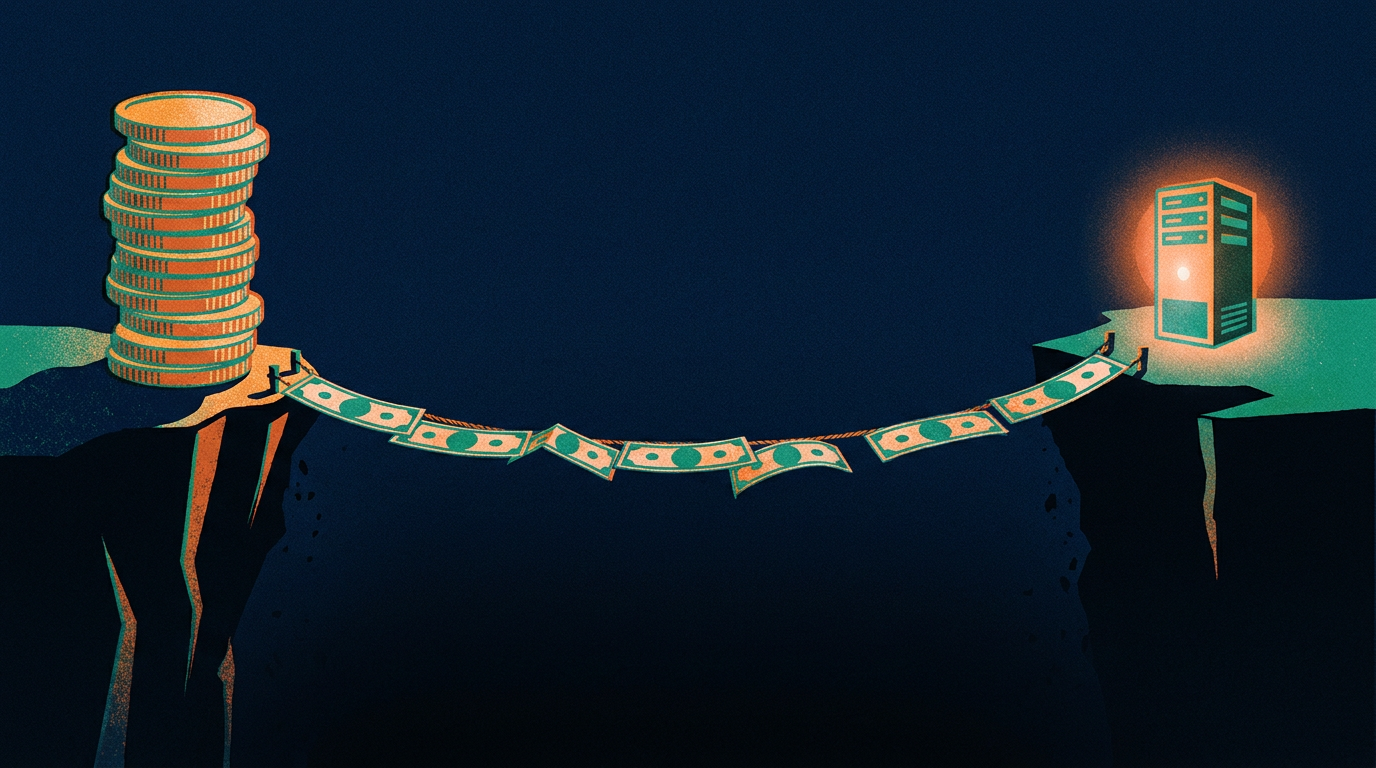
SoftBank put $64.6 billion into one AI company.
That bought about 13% of OpenAI. Founder Masayoshi Son calls it an "all in" bet.
On paper ¥44.7 trillion. In the market ¥17 trillion.
Net asset value (NAV) is what SoftBank owns, minus what it owes.
Teal dots are book value. Orange dots are what the stock market pays. The June dot spans the whole month.
On 20 November the market valued SoftBank at 38% of its 9 November book value. The dates are 11 days apart and both moved in between, so treat 38% as rough.
Sources: SoftBank Q2 FY2026 results via Investing.com (NAV at 30 Sep and 9 Nov prices); BigGo Finance (market value, June and 20 Nov).
SoftBank's share price, from its June high of ¥8,632 to ¥2,984.5 on 27 November.
Reuters (June high); CNBC (27 Nov quote, delayed).
How the bet got so big
$64.6B went into OpenAI for about 13%. $30B of it was added in 2026.
Record quarter of financing: $56.5B. That was $39.9B of debt and $16.6B from asset sales and loans against shares.
In 2025 it sold all its Nvidia shares ($5.83B) and part of T-Mobile ($9.17B). It had sold Nvidia in 2019 too. One estimate says that missed a rally worth over $100B.
Stargate is the $500B data-centre plan. SoftBank holds the financial responsibility. OpenAI runs the sites.
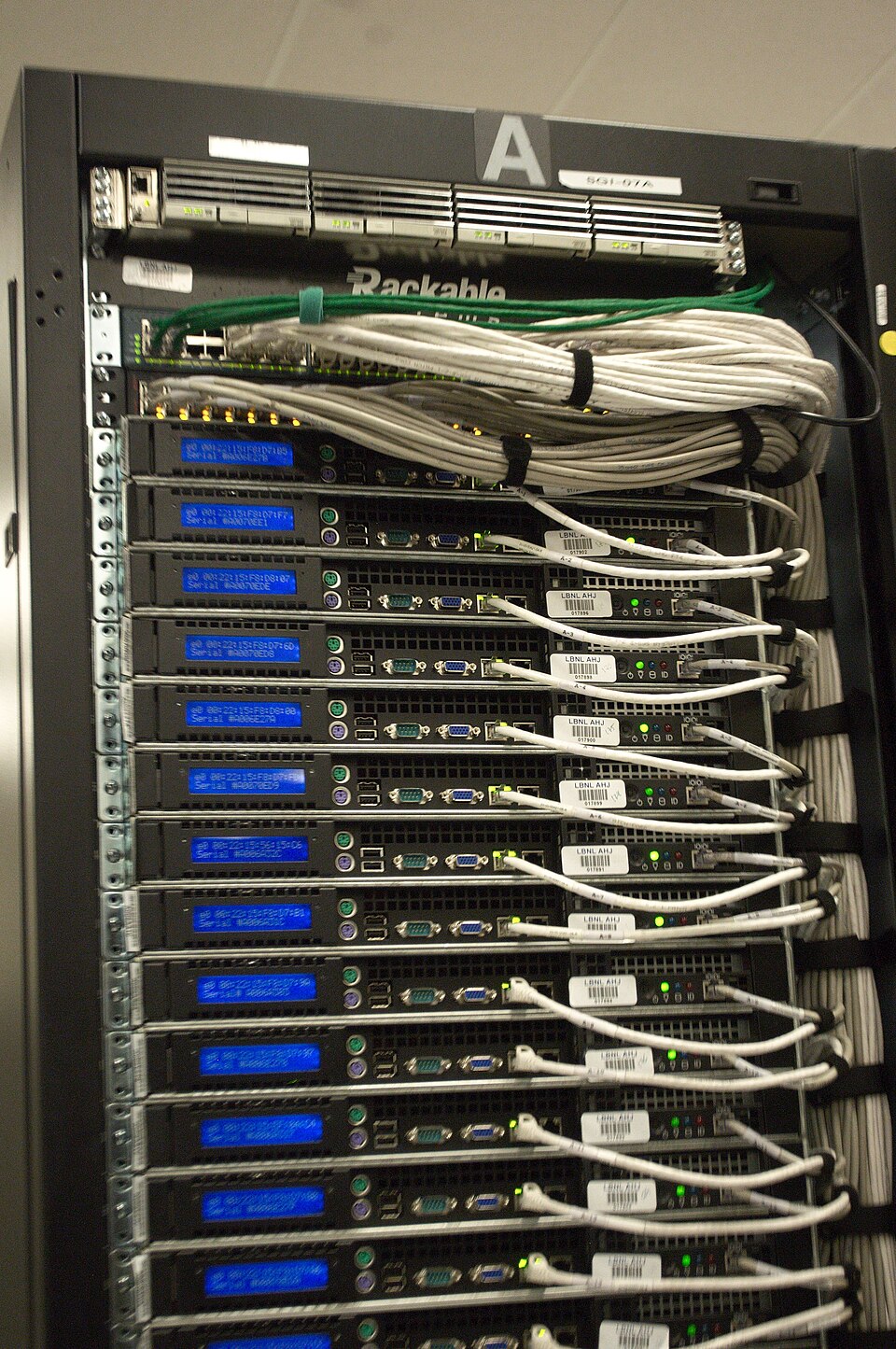
Sources: Investing.com; CNBC; Reuters; OpenAI.
Gap one: SoftBank pays 9.75%. Alphabet pays 5.2%.
On each $1 billion borrowed, that is $97.5 million a year vs $52 million. SoftBank pays $45.5 million more.
Its interest bill hit ¥462 billion in one quarter, more than double last year. On 6 November, insuring its debt cost 4.66% a year, a high since October 2022.
Sources: Reuters (9.75% vs 5.2%); Investing.com (coupons, CDS); BigGo (interest). Alphabet is a rough benchmark: a different issuer and maturity.
Gap two: the $45 billion OpenAI gain is on paper.
SoftBank counts the gain today. It turns into cash only when shares are sold, and OpenAI's listing slipped to 2027.
Investors took 37% of the planned money so far, at 89% of the target price. Only the first close is in, so the 37% can still rise.
Sources: Reuters ($45B gain, as reported for 31 Mar 2026); BigGo Finance (round, IPO date).
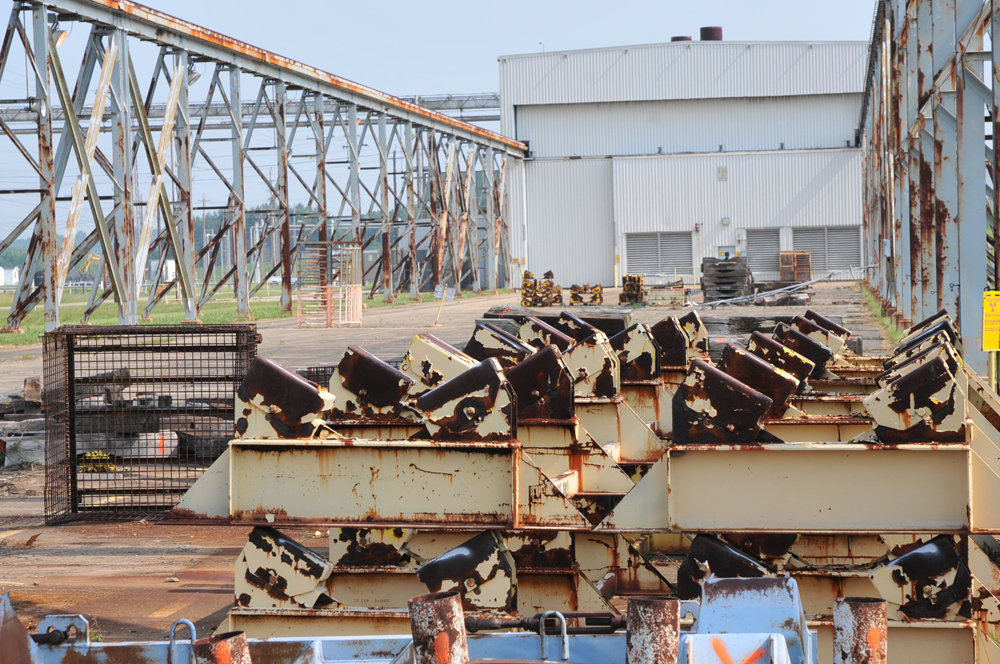
Gap three: the bills start now. The campus pays later.
The Ohio campus has 8.0 gigawatts of IT capacity and a 20-year OpenAI lease, signed in August. It sits on the former Portsmouth uranium plant site.
Sources: Investing.com (lease, capacity); BigGo (2028 and 2032); Vindicator (site); Reuters (bond due 2034).
Gap four: the plan changed after the money was paid.
SoftBank lost ¥597 billion (about $3.7 billion) on U.S. data-centre power equipment it had prepaid. It revised its plan, so the prepayments became non-refundable.
Jefferies analysts called management reactive on construction. The three items add up to ¥919 billion of the ¥1.1 trillion quarterly loss. The other ¥196 billion is what is left (our sums).
Sources: BigGo Finance (write-off, Jefferies, net loss); Investing.com (Intel derivative loss). "All other" is net loss minus the three items (our sum).
What still holds
Cash: ¥5.0 trillion ($32B). That is over twice the bonds due in two years.
The $40B bridge loan was repaid six months early.
OpenAI's sales run rate: about $50B, up 70% or more in one quarter.
SoftBank Q2 slides via Investing.com. The run rate is a company claim.
Gap five: the safety ratio is fine today, and moves with prices.
LTV (loan-to-value) is net debt divided by what SoftBank owns. The limits are 25% normally and 35% in a crisis.
LTV was 13.0% on 30 June, 15.9% on 30 September and about 20% on 9 November.
The 25% line sits at a 36% fall in holdings since September. So far the fall is about 21%.
Sources: SoftBank figures via BigGo and Investing.com. Curve: LTV = 15.9% ÷ (1 − fall), net debt flat at ¥11.3T (our sum). The orange arc covers 19.5% to 20.5%, since "about 20%" is rounded. We found no newer company figure.
Two assets carry the whole structure.
Arm is 54% of what SoftBank owns. OpenAI is 69% of Vision Fund 2's gains so far. The two bars have different bases, so do not add them.
When AI sentiment drops, both fall together. That is how a stock problem becomes a credit problem.
Sources: BigGo Finance (company disclosures); Investing.com.
The bet Son did not make
19 Nov: Anthropic's IPO raised $81.3B, the largest on record.
First-day value: about $1.3T. OpenAI's last round: $1.25T.
18 Nov: Son called passing on Anthropic "one of my mistakes."
20 Nov: SoftBank fell 14.48%, its worst day since August 2024.
Sources: BigGo Finance; CNBC. The two valuations are dated differently.
Sources and method
- Reuters, 14 Oct 2026: SoftBank junk bond sale
- Investing.com, 10 Nov 2026: SoftBank Q2 slides
- Investing.com, 6 Nov 2026: credit test
- BigGo Finance, 23 Nov 2026: Son and Anthropic
- CNBC, 20 Nov 2026: worst day
- Reuters, 13 May 2026: OpenAI gains
- CNBC, 11 Nov 2025: Nvidia stake sale
- OpenAI: the Stargate Project
- Vindicator, Mar 2026: PORTS campus
- More Vizmaya stories on AI infrastructure
Photos: Piketon site, public domain; server rack, CC0. The hero is an AI illustration.


Our sums: 38% = 17 ÷ 44.7. Net debt ¥11.3T = 15.9% × ¥71.14T. Holdings fell about 21% since 30 Sep (1 − 15.9 ÷ 20). LTV 25% needs a 36% fall (1 − 15.9 ÷ 25) and 35% needs 55%, with debt held flat. ¥919B = 457 + 140.2 + 321.9. A script did the arithmetic, since we are bad at it.
One summary lists the quarter's net loss as ¥768B. Bloomberg and BigGo give about ¥1.1T. We use the larger figure and could not reconcile the two.
Dates differ across cards and are shown on each. Slide figures, such as OpenAI's run rate, are company claims we did not verify.
Disclosure: Anthropic makes Claude, the AI that helped draft this story, and appears in one card.
-
Two prices for one company
SoftBank's books say ¥44.7 trillion. The stock market says ¥17 trillion. We found five gaps behind that difference.
-
The headline gap is ¥27.7 trillion wide
The market pays about 38 yen for every 100 yen of book value. Shares are down 65% from their June high. How did SoftBank get here?
-
One company, funded by selling others
SoftBank put $64.6 billion into OpenAI for about 13%. It paid by selling Nvidia and T-Mobile shares, then by borrowing. What did the borrowing cost?
-
Money got expensive
SoftBank pays 9.75% on its newest dollar bond. Alphabet paid 5.2%. The OpenAI gain that justifies the cost is not cash yet.
-
The gain is on paper
SoftBank reports a $45 billion OpenAI gain. OpenAI's own round has raised $11 billion of a planned $30 billion, and its listing moved to 2027.
-
Bills now, income later
The Ohio campus starts in 2028 and fills by 2032. The 9.75% bond is due in 2034. What happens when plans change mid-build?
-
A ¥597 billion plan change
SoftBank wrote off prepaid power equipment. With an Intel-linked loss, that is ¥919 billion of a ¥1.1 trillion quarterly loss. Can the balance sheet absorb it?
-
What still holds
Cash is ¥5.0 trillion, and a $40 billion bridge loan is repaid. So the question is the safety ratio.
-
The safety ratio moves with prices
LTV rose from 15.9% to about 20% in six weeks. The 25% line needs a 36% fall in holdings since September, vs about 21% so far. That cushion depends on prices.
-
Two assets hold it all up
Arm is 54% of holdings. OpenAI is 69% of Vision Fund 2 gains. They tend to fall together.
-
The bet Son did not make
Anthropic listed on 19 November at about $1.3 trillion. Son called passing on it "one of my mistakes." One company is a narrow place to stand.
-
Three numbers to watch
Read the next SoftBank report for LTV, OpenAI's listing date and the yield on the next bond. Sources and method are pinned at the end.