What Y Combinator funded in 2026: fewer apps, more atoms, and 19.2% of the class in Industrials
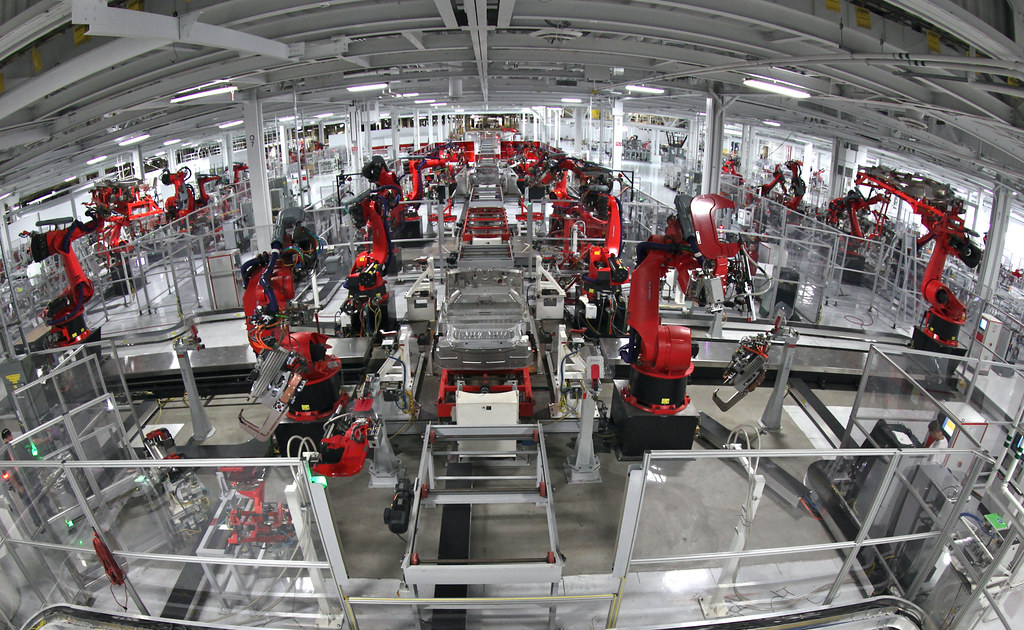
For a decade the world's most famous startup school mostly funded software that sells software to people who sell software. In 2026 it took 792 companies, and almost one in five of them makes something you could drop on your foot.
Industrials nearly doubled its share in a year. Defense went from one company to 22. B2B is still the majority, just a smaller one, and the classic dev-tools pitch is quietly being shown the door. Most of the class, as ever, lives within a short Waymo ride of each other.
Who gained and who lost a slice of the 2026 class?
Measured as a share of each year's companies, so a bigger class can't flatter anyone, Industrials gained the most. Fintech and Healthcare edged up. B2B and Consumer gave ground.
Inside B2B, Infrastructure rose while Engineering, Product and Design, the old home of developer tools, roughly halved. YC's partners noticed too: on their own podcast they put hard tech at 8% of a batch going to 20%.
Change in share of YC companies, 2025 to 2026, percentage points
Rust: gained share. Pink: lost share. Bar length is the size of the change. Counts from Invisible Keyboard's 24 Oct 2026 pull of YC's directory (620 companies in 2025, 792 in 2026); 2026 is provisional until Fall Demo Day on 2 Dec.
How big is a YC year now? 792 companies, across four batches.
In September 2024 YC announced it would stop running two batches a year and start running four, presumably on the theory that the one thing Silicon Valley lacked was more Demo Days. The first Fall batch ran in 2024; the first Spring batch, X25, opened in January 2025.
So 2024 was a three-batch year: Winter (248 companies), Summer (248) and a pilot Fall (94), 590 in all. 2025 ran four batches for about 620. 2026 has run four for roughly 792, which is 28% more startups than the year before.
The Fall 2026 batch is still filling up until its Demo Day on 2 December, so 2026's figure, about 162 for Fall, is a snapshot. YC's directory now labels Spring 2026 "P26"; most trackers still call it X26.
Three years of YC batches, cut to scale. 2024 skipped spring.
Batch sizes: yc-oss mirror of YC's directory, snapshot 2 Sep 2026. 2024: 248 + 248 + 94. 2025: 166 + 143 + 166 + 146. 2026: 199 + 195 + 236 + about 162 (Fall still in progress). Scale 0–800 companies.
How fast did hard tech grow? From about 10% of a batch to nearly 25% in a year.
Industrials, YC's own label for companies that build physical things, held steady at about one company in ten through all four 2025 batches. Then Winter 2026 reached 14%, and Summer 2026 hit roughly a quarter. Fall 2026 is tracking about the same.
Across whole years that is 41 Industrials companies in 2024 (6.9%), 63 in 2025 (10.2%) and 152 in 2026 (19.2%). YC partner Diana Hu, on the firm's Lightcone podcast, described the same shift as hard tech going from 8% to 20%. It is rare for a podcast and a spreadsheet to agree, so we will take it.
Independent batch counts by New Economies, YC Roaster and Jared Heyman put Summer 2026 at 23–24%, a little under the 24.9% in Invisible Keyboard's 24 October pull. Directory tags drift from week to week; the shape doesn't.
Industrials share by batch: flat for a year, then the robots got in
Line: Invisible Keyboard's count of YC's directory, 24 Oct 2026. Pink rings: independent snapshots (YC Roaster, New Economies, Jared Heyman); F26 partial. Dashed line: 2025 average, 10.2%. Shaded: 2026 batches.
How many defense startups did YC fund? One in 2024. 22 in 2026.
YC's own Defense page, as of October 2026, lists one Winter 2024 company; six across 2025 (one, two and three in Winter, Summer and Fall); and 22 across the four 2026 batches (two, five, nine and six). Summer 2026 alone took more defense startups than YC funded in all of 2024 and 2025 combined.
For an accelerator whose best-known alumni sell home rentals and payment links, that counts as a change of tone.
Treat 2024's "one" as a floor. YC files each company under one subindustry only, so defense startups tagged Aviation and Space don't show up here. Ares Industries (S24), which builds low-cost cruise missiles and which TechCrunch called YC's first defense startup in August 2024, is one of them. The page also moves: it listed 12 companies in April 2026 and 31 in October.
One block, one defense startup. 2024 was a lonely year.
Stacks build bottom up in batch order. Source: YC company directory, Industrials › Defense, October 2026. Fall 2026 is still adding companies.

Which corners of hard tech grew fastest? Defense and energy, by about 3×.
Raw counts make every category look heroic in a year when the class grew 28%. So we compared shares instead. Defense went from 0.97% of the 2025 class to 2.78% in 2026, about 2.9 times. Energy went from 0.65% to 2.0%, about 3.1 times, on a base so small that one extra 2025 energy startup would have changed the multiple noticeably.
Manufacturing and Robotics, the biggest hard-tech subindustry, grew from 5.5% to 8.1% (1.5×). Over in software, B2B Infrastructure went from 6.1% to 10.6% (1.7×), which is what happens when everyone needs somewhere to run their models.
Counts behind these shares (Defense 6 → 22, Manufacturing & Robotics 34 → 64, Energy 4 → 16, Infrastructure 38 → 84) come from Invisible Keyboard's 24 October pull. Defense matches YC's directory exactly; the others fit what the directory shows but couldn't be confirmed to the company.
Growth from 2025 to 2026: the headline count, and the honest share
Rust: growth in raw company counts. Black: growth in share of each year's class (620 companies in 2025, 792 in 2026). Share multiples are vizmaya's arithmetic.
What fell out of favour? Tools for developers, down to 8.0% of the class.
YC's Engineering, Product and Design subindustry, home of the developer tool, the design tool and the "Figma, but for…" pitch, held 15.5% of 2025's companies (96). In 2026 it holds 8.0% (63 so far). Its share halved in the year every developer acquired an AI coding agent.
Infrastructure took its place as B2B's busiest corner, topping the subcategory counts in Winter, Spring and Summer 2026. The money followed the picks and shovels, now relabelled "compute".
Fall 2026 is unfinished, so the 63 can still grow before Demo Day on 2 December. And the category is broad: it also holds product and design tools, and some AI coding agents, so "developer tools are dead" overstates it. "Developer tools are now a smaller slice of a bigger pie" is less quotable and more accurate.
The changing of the B2B guard
Top half of each bar: 2025. Bottom half: 2026. YC's subindustry names, from the yc-oss mirror of its directory; counts from Invisible Keyboard's 24 Oct 2026 pull.
Is YC still a B2B software shop? Mostly, at 56%. It used to be two-thirds.
B2B fell from 65.3% of the 2025 class to 56.1% in 2026, still more than every other industry put together. Industrials took most of what B2B gave up, rising from 10.2% to 19.2%. Fintech grew from 5.6% to 8.5% and Healthcare from 6.9% to 8.2%.
Consumer slipped from 6.8% to 5.3%. Batch-by-batch snapshots put it nearer 6%, a difference consumer founders will take personally and then turn into a viral launch video.
The five industries shown cover 97.3% of 2026's companies. The remaining 2.7%, about 21 companies, are in Education, Real Estate and Construction, Government, or untagged. Batch snapshots of B2B in Summer 2026 (52.3%) and Fall so far (53%) suggest the slide is still going.
Everyone's share went up except the two that used to be the whole party
Hollow dot: 2025. Filled dot: 2026, rust if up, pink if down. Source: Invisible Keyboard's 24 Oct 2026 pull of YC's directory; 2025 n = 620, 2026 n = 792.
Does the class still move to San Francisco? About 72% say so.
Remote-first was the future, briefly. In 2026 roughly seven in ten YC companies list San Francisco as a location, up from about six in ten in 2024. Spring 2026 was the peak: 86% of the batch named the city, which at that point is less a location than a dress code.
Batch by batch, from Invisible Keyboard's August count and YC Roaster's October one: Spring 2025 56%, Summer 2025 69%, Fall 2025 62%, Winter 2026 68%, Spring 2026 86%, Summer 2026 72%, and Fall 2026 69% so far. Weighted by batch size, 2026 comes to about 72–74%.
"Lists San Francisco" is not the same as "is headquartered in San Francisco": companies can list several cities, and different counts treat them differently. The direction is clear; the decimal place isn't.
Share listing San Francisco, by batch: Spring 2026 basically moved in
Cream bars: 2025 batches; ochre: 2026. Sources: Invisible Keyboard, 4 Aug 2026; F26 from YC Roaster (76 of 110 companies, 4 Oct).


How many startups are "agentic"? Between a fifth and a third, depending on where you look.
Count the word "agent" or "agentic" in each company's one-line pitch and the share climbs from 15.3% in 2024 to 19.7% in 2025 and 22.2% in 2026. Count it in the longer company description instead and it gets much bigger: 57 of Winter 2026's companies and 81 of Spring 2026's, 138 between them, or about 35%.
In other words, a lot of startups are agents in the paragraph and something more modest in the headline. This is the opposite of how pitch decks usually work.
Keyword counts are sensitive to the field searched, the spelling rules and whether "agency" counts. The one-liner shares and the description counts come from different Invisible Keyboard pulls, and neither publishes its exact method, so read these as a range, not a measurement.
Agents in the headline, and agents in the small print
Share of companies using "agent" or "agentic". Hatched: a different field and only two batches (138 of about 394 companies). Sources: Invisible Keyboard, 24 Oct 2026 infographic and 17 Oct 2026 post.
YC 2026 in six numbers, for people who skipped to the end
Companies in the 2026 class, 28% more than 2025. Demo Day sessions are not getting any shorter.
yc-oss; Invisible KeyboardShare in Industrials, up from 10.2%. Software ate the world; now it is shopping for a factory.
Invisible Keyboard, 24 Oct 2026Defense startups in 2026, against one in 2024. Summer alone outdid the previous two years.
YC directory, Oct 2026Share still in B2B. Still the majority, now with less of a swagger.
Invisible Keyboard, 24 Oct 2026Share in Engineering, Product and Design, down from 15.5%. The tools now build themselves, allegedly.
Invisible Keyboard, 24 Oct 2026Spring 2026 companies listing San Francisco. Remote work sends its regards.
Invisible Keyboard, 4 Aug 2026