Why Europe shuts down in August
Need a dentist, a builder or a loaf of bread? Try August.
A whole continent switches off at once. The reason is older than you think, and less silly than it looks.


In August, a continent goes out of office
Do you need to see a dentist, get some building work done, or buy a loaf of bread? If you live in continental Europe, you will know that trying to do any of these things in August is generally not a good idea. A surprising number of businesses observe the long-established tradition of closing their doors for the whole month (though some prefer to do so in July).
Pictures of hammocks and palm trees adorn the websites of small businesses across the continent, wishing customers a happy holiday and advising them to come back again in September. “Summer is near and Frankie will take a nap for a while,” says the site of Frankie’s Social, a bar in Limassol, Cyprus, without giving any indication of when it might open again.
The numbers agree. In 2024, people in the EU spent 16.5% of all their nights away from home in August alone. An even spread would give each month 8.3%.
Argued by no one. This is Eurostat counting. August had 3.7 times more nights away than November.
So why does a whole continent do this?
August alone holds nearly twice a fair share of the year's nights away
Share of nights away by EU residents, 2024. Source: Eurostat, Seasonality in tourism demand
Summer is for play, and the idea is very old
Why do Europeans take off August en masse? The idea that summer is for play, not work, seems hard to shake for many Europeans. The habit is especially ingrained in old manufacturing sectors.
Start in Italy. The word Ferragosto comes from the Latin Feriae Augusti, "the rest of Augustus". The story says the first Roman emperor set August aside for rest in 18 BC, after the hard work of the harvest.
Later the Church moved the day to 15 August, the feast of the Assumption. Today Italians still take their break around that date.
Argued: one historical investigation says no ancient source shows Augustus created the festival in 18 BC. The name is real. The founding story may be a myth.
The August break has had a name for about two thousand years
- 18 BCFeriae Augusti, the "rest of Augustus", after the harvest (claimed, see note).
- 7th c.Christians link 15 August to the Assumption of Mary.
- RenaissanceThe August rest becomes law in the Papal States.
- TodayAbout 13 million Italians are on holiday in the week of Ferragosto, almost a quarter of the country.
Sources: Wikipedia, Ferragosto; RomeWise; Fortune Italia on Confcommercio
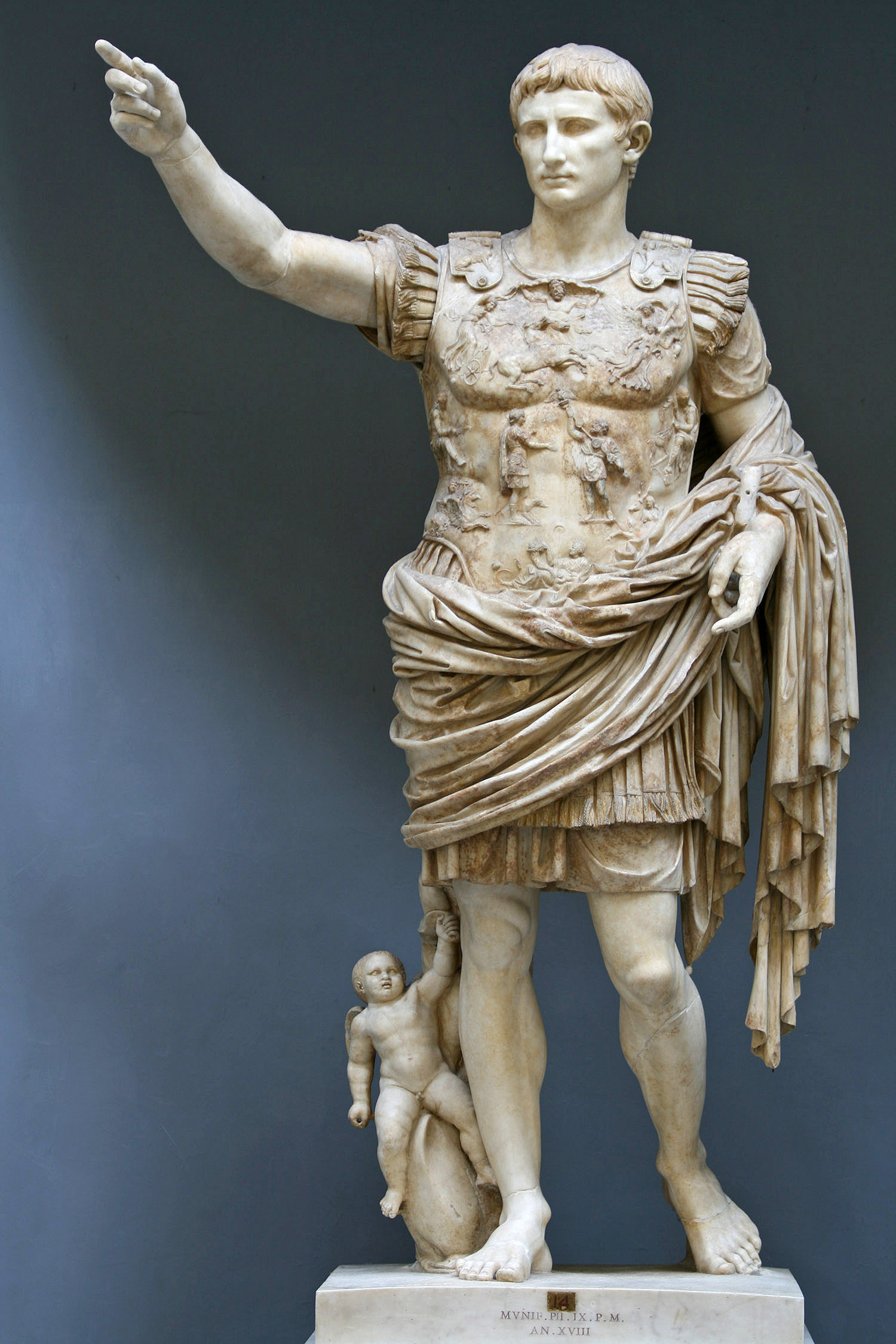
Augustus of Prima Porta, Vatican Museums. Photo: Till Niermann / Wikimedia Commons, CC BY-SA 3.0

Whole factories left town together
During and after the industrial revolution, entire factories in northern England would decamp to the same beachside resorts. Until the 1980s Volkswagen, a German carmaker, would charter trains at the start of summer break to move thousands of Italian workers from its plants in Wolfsburg, which turned into a ghost town, to their homes in Italy.
In Lancashire these were called Wakes Weeks. Each cotton town picked its own week, the mills shut, and the town emptied out toward Blackpool. The rail line from Oldham to Blackpool opened in 1846, and by 1860 more than 23,000 holidaymakers were using it.
The Wolfsburg story starts in 1955, when West Germany signed a deal to recruit Italian workers. By the 1960s nearly 4,000 of them lived in a camp near the plant, known as the "Italian village".
The "charter trains until the 1980s" detail comes from the source article. We found no second source for it. The rest is documented.
The same pattern in two countries, a century apart
- 1846Rail link from the mill town of Oldham to Blackpool opens.
- 1860More than 23,000 holidaymakers travel in the peak year.
- 1955Germany and Italy sign a worker recruitment agreement.
- 1962First Italian migrant workers arrive at Volkswagen in Wolfsburg.
- TodayWolfsburg still stops for about three weeks every summer, with a brass band as the send-off.
Sources: Wikipedia, Wakes week; City of Wolfsburg; German History in Documents and Images; Business Insider on Bloomberg

Blackpool seafront, c. 1903 postcard by Raphael Tuck & Sons. Newberry Library via Wikimedia Commons, public domain.


Guest worker housing at the VW plant, Wolfsburg. Photo: Lothar Schaack, Bundesarchiv B 145 Bild-F038815-0012 / Wikimedia Commons, CC BY-SA 3.0 DE

An assembly line needs everyone, so everyone leaves
One reason is that an assembly line does not function very well without a full complement of workers, so it makes sense for them all to take time off together. It is also a good opportunity to perform any maintenance or upgrades on the factory floor.
Think of a relay race. If one runner is missing, the baton stops for everyone. So the whole team rests at once.
The Lancashire holiday began the same way. It was an unpaid week when the mills closed for maintenance.
The shutdown is a choice, not a law of nature. In 2011, when orders were strong, BMW cut its summer break at two plants from four weeks to one. Volkswagen ran two shifts at Wolfsburg from late July to mid August, and about 2,500 workers agreed to move their holiday.
The timing matters in the data too. In August 2025, German manufacturing output fell 4.3%, mostly because car plants took their holiday late, says Commerzbank.
A factory has a reason. But an ice-cream shop?
When demand is high, the shutdown shrinks fast
BMW plants at Dingolfing and Regensburg, per Handelsblatt via Autohaus. Sources: Autohaus; Commerzbank Research; Wikipedia, Wakes week
Then the habit left the factory
Yet the practice of downing tools in the midst of summer has spread well beyond the industrial sphere. It is harder to apply the same logic to restaurants and cafés, particularly those serving tourists.
“We are open the rest of the year, seven days a week, so these days are earned,” says Rita Zubelli, who works in an ice-cream parlour in Milan that, bafflingly, shuts down at the height of the summer. In such sectors the practice of a shutdown seems driven more by habit, and the social acceptance of holidaymaking at that time, than by business logic.
One 2024 survey in the Bergamo area found about half of shops and businesses planned to close in the middle weeks of August. Among bars and restaurants outside tourist zones, it was about 40%.
In France, a rule from 1790 once made Paris bakers announce their holidays so each area kept its bread. It was scrapped around 2015.
Inferred: these are local surveys and one reporter's walk, not a Europe-wide count. They show the habit, they do not measure it.
Even places that serve locals plan to close, about half of them
Share planning to close in mid August 2024. Soft ends mark a rounded survey result. Source: In Trieste, citing an Ascom Bergamo survey

The beach at Rimini, Italy, 14 July 2012. Photo: Piiiiiiiiiiiiiiiiiiinna / Wikimedia Commons, CC BY-SA 3.0

Time off became a right, and the beach filled up
Why does everyone take the same weeks? Because time off stopped being a favour and became a right.
Before 1936, only a small group of French workers had paid holidays. About 5 in 100 wage earners in Paris did. In June 1936 parliament gave every worker two weeks of paid leave.
That summer more than 600,000 workers and their families went away on holiday. A year later there were three times as many. Cheap rail tickets helped, with about 40% off.
Argued: sources disagree on whether France was first or one of the last in Europe to do this. Some credit the Popular Front. Others note the idea was not in its election programme and came from a centre-left partner.
France's guaranteed paid leave grew from two weeks to five
Sources: LCP; Cnam; Vikidia citing Stéphane Sirot; Hérodote

An article on paid holidays in the magazine Regards, 13 August 1936. Gallica, BnF via Wikimedia Commons, public domain.

Today the law guarantees at least four weeks
Since 1993, EU law says every worker gets at least four weeks of paid leave a year. That is 20 working days. Most countries stop there, and 19 of them use exactly that floor.
Austria, Denmark, France and Sweden give 25. Spain and Portugal give 22. Luxembourg gives 26.
Public holidays come on top. In 2020 they ran from 6 days in Greece to 15 in Latvia, Lithuania and Slovakia.
Counting method differs by country. In the UK, bank holidays count inside the 28 days. The US has no federal minimum for paid leave.
Paid days off by law, leave plus public holidays: 26 to 38 in the EU, none federally in the US
Days per year, 2020 data for the EU. Sources: Euronews, from OECD; Leavebalance, from Eurofound; Newsweek
Fewer hours, and still very productive
Yet despite, or perhaps because of, their leisure-seeking ways, Europeans are the most productive workers in the world.
Productivity here means money made per hour of work. By the OECD's 2023 count, all of the top five are European. Ireland leads at $151 an hour, and the US sits seventh at $97.
The gap in hours is large. A German worker puts in about 1,340 hours a year, and an American about 1,765. That is 425 fewer hours, with $94 of output per hour in Germany against $97 in the US.
Argued: Ireland and Luxembourg look high partly because multinationals book profits there. And when hours are short, each hour can look better by design. So read this as "no big penalty", not as proof that rest causes output.
Output per hour worked, 2023
Hours worked per worker per year
US dollars at purchasing power parity. Sources: Visual Capitalist via Mental Floss, from OECD; Wikipedia, from OECD; Bruegel
The trick is not resting. It is resting together
Dan Rogers of Peakon, a consultancy, thinks the dip in employee productivity over holiday periods could be a good reason to accept the European summer. From an employer’s perspective, he says, “if your employees are less productive, and your business partners less responsive, the sensible decision would be to shut up shop”.
His own survey was about Christmas, not August. Of more than 2,000 UK workers, 57% admitted to downing tools by 18 December. About one in three said business had simply slowed.
Now the whole picture fits. If everyone is away, nobody waits on anybody. A shop that stays open in August sells to an empty street.
Inferred: Rogers' point and the Christmas survey support the logic. No one has measured the August effect on its own.
When the holidays start, work slows anyway
Peakon survey of UK workers, December 2017. Source: AZ Big Media, quoting Peakon
The whole story in six numbers
percent of EU tourist nights fall in July and August (2024)
Eurostatmore nights away in August than in November
Eurostatpaid leave days, the EU legal floor
EU Working Time Directivethe year France gave every worker two paid weeks
LCP, Cnamhours a year, German vs American worker
OECD via Wikipediamillion Italians on holiday in Ferragosto week
Confcommercio